Streamlining Asset Performance Through The Microsoft Dynamics 365 Asset Management System

What is Asset Management in Microsoft Dynamics 365 Finance and Operations?
Hence, businesses should maintain complete asset details, which include the asset's location, status, usage history, and required maintenance activities. The asset management software will improve organizational asset management by providing tools to help organizations determine their asset distribution needs. The organization will use this information to make decisions about its upcoming capital expenditures. The Microsoft asset management platform can carry out preventive maintenance programs.


Asset Management in Microsoft Dynamics 365
Key Features of Asset Management
Microsoft Dynamics 365 Asset Management offers a wide range of features to help businesses manage assets effectively and maintain operational efficiency.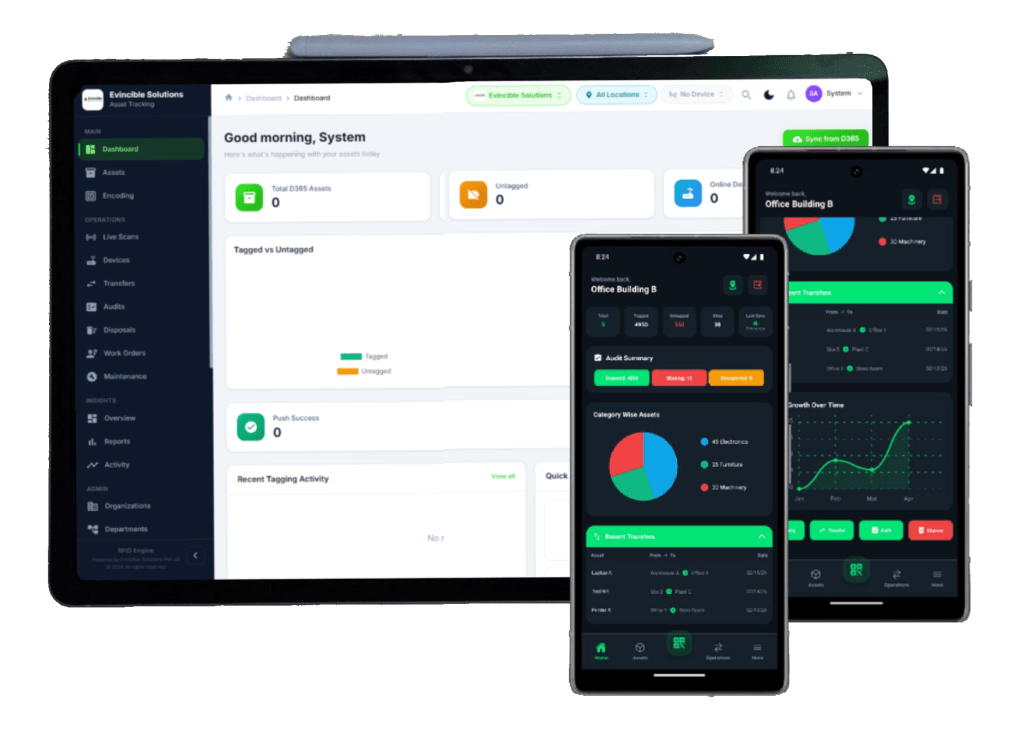
Asset Lifecycle Management
Real-Time Asset Tracking
Manual Data Syncing
Direct RFID Machine Integration (LAN/Bluetooth)
Warehouse Count / Transfer
Geo Location
Asset Tagging (Individual / Bulk)
Azure AD SSO
Asset Management in Microsoft Dynamics 365 Finance & Operations | Evincible Solutions
Everything You Need for Asset Management
Asset Management
Track, categorize, search, and export your entire asset inventory. Advanced filtering, bulk operations, and detailed asset profiles with complete history.
RFID Tagging
Encode, associate, and manage RFID tags with intuitive scanning workflows. Support for bulk tagging sessions with real-time progress tracking.
Disposal Management
End-of-life asset tracking with approval workflows. Maintain compliance records and automatically update D365 when assets are retired.
Transfer Management
Location-to-location asset transfers with configurable acknowledgment workflows. Full audit trail from request through to completion.
Audit & Compliance
Schedule and execute physical audits using RFID scanning. Automated variance detection compares expected vs. found assets in real time.
D365 Integration
Bidirectional synchronization with Microsoft Dynamics 365. Pull assets, push RFID data, sync locations, and maintain field mappings.
Reports & Analytics
Inventory reports, utilization analytics, scan session summaries, and exportable data. Drill down from high-level metrics to individual assets.
Real-time Dashboard
Live KPI widgets, charts, and activity feeds. Monitor asset counts, scan sessions, transfer status, and system health at a glance.
Adaptive Interface
Full dark and light theme support with responsive design that works across desktops, tablets, and mobile devices.
Industries Using Asset Management
Many industries rely on physical assets to provide products and services. Asset Management in Dynamics 365 is widely used across these industries.
Manufacturing
Manufacturing companies rely on physical assets to maintain continuous operations. Asset management in Dynamics 365 can be very helpful in these types of companies.
Construction
Construction companies have fleets of heavy equipment, including cranes, excavators, and trucks. Asset management software can be very helpful in these types of companies.
Energy and Utilities
Energy companies have complex assets, including power plants, pipelines, and distribution networks. Asset management in Dynamics 365 can be very helpful in these types of companies.
Logistics
Companies that operate in the transportation industry can use asset management in Dynamics 365 to track fleets and manage logistics operations.
Facility Management
Companies responsible for managing facilities can use Dynamics 365 asset management to manage facility assets.
Food and Beverages
Companies responsible for managing facilities can use Dynamics 365 asset management to manage facility assets.
Healthcare
Companies responsible for managing facilities can use Dynamics 365 asset management to manage facility assets.
Warehouse Management
Companies responsible for managing facilities can use Dynamics 365 asset management to manage facility assets.
Ready to Transform Your Business?
Empower innovation and drive efficiency with tailored solutions from Evincible Solutions, built on Microsoft Dynamics 365.Benefits of Using Asset Management in Dynamics 365
Improved Equipment Reliability
Lesser Maintenance Costs
Increased Operational Efficiency
Improved Decision-Making
Enhanced Compliance and Safety
Improved Resource Management
Why Choose Evincible Solutions?
Blogs


Dynamics CRM for Real Estate: A Powerful Guide to Smarter Property Management
Real estate operations involve a constant flow of moving parts—leads arriving through multiple channels, property information spread across different systems, deals at different stages, client interactions across email and phone,
Dynamics 365 Asset Management: Features, Benefits & Maintenance Guide
Modern businesses rely on equipment, machinery, vehicles, and production assets to keep operations running smoothly. When these assets are not properly maintained, organizations often face costly downtime, delayed production, higher
How Dynamics 365 CRM Analytics Boosts Sales Performance
Most sales teams aren’t short on data—they’re short on insight. Deals stall, forecasts fall short, and sales reps chase the wrong leads, not because the CRM lacks information, but because