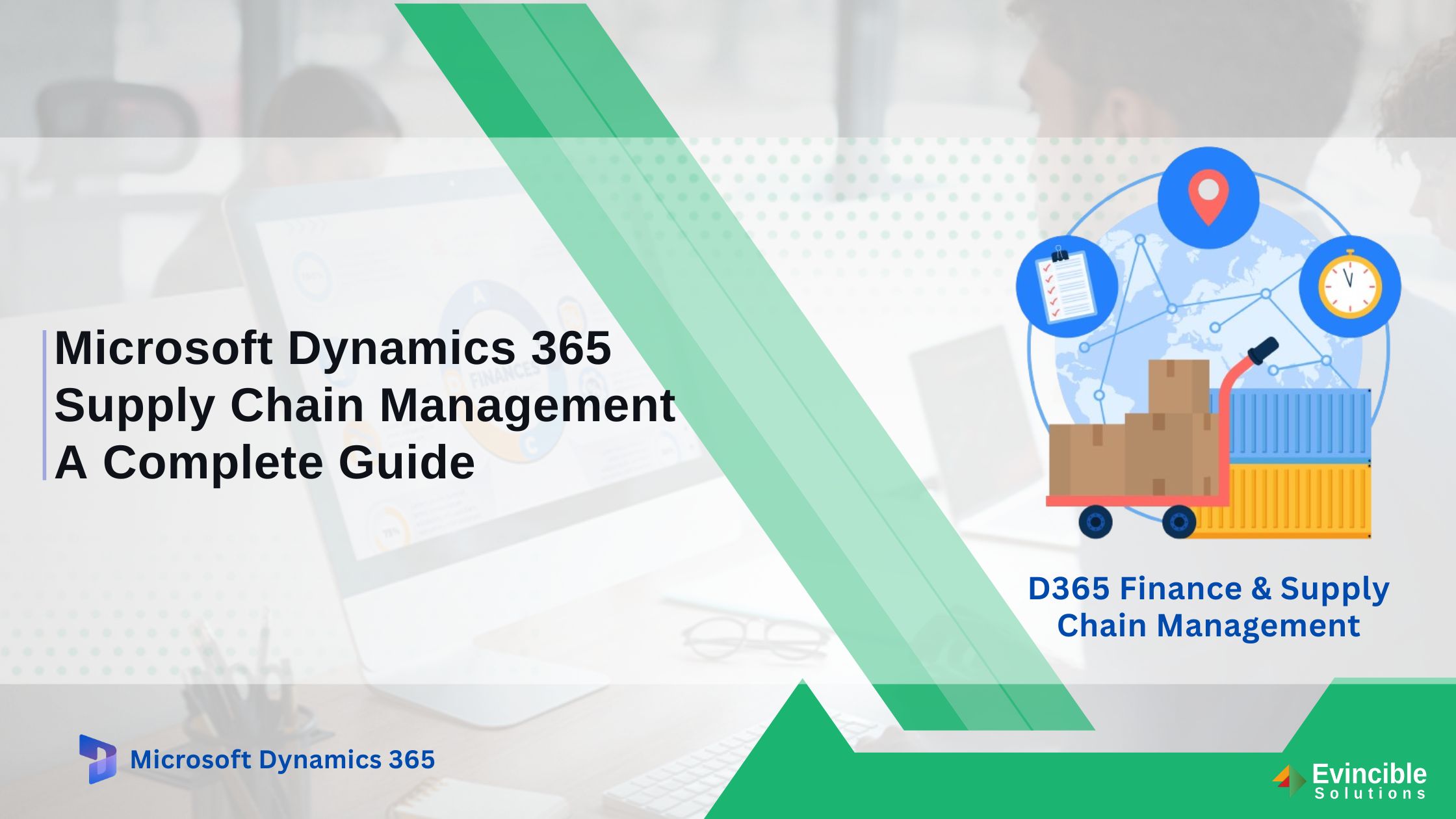
Global supply chains are under more pressure than ever: raw material shortages, rising freight costs, and constantly shifting customer demand all add disruption to daily operations. Even a small supplier delay can quickly lead to missed shipments when manufacturers, distributors, and retailers rely on disconnected systems.
Microsoft Dynamics 365 Supply Chain Management (SCM) addresses these challenges by connecting procurement, production, warehousing, transportation, and customer fulfillment in a single platform. Built-in tools like predictive demand forecasting and real-time inventory visibility across warehouses and locations give teams end-to-end control for managing complex supply chains.
In this guide, you’ll learn about D365 SCM’s core features, AI-driven capabilities, and business benefits, along with what a typical implementation process looks like. We’ll also cover how partnering with the right consulting team can help you get the most value out of your investment.
What Is Microsoft Dynamics 365 Supply Chain Management?
Microsoft Dynamics 365 Supply Chain Management is an intelligent, cloud-based ERP application that enables organizations to manage end-to-end supply chain processes. D365 for Supply Chain spans the full operational lifecycle, including:
- Product Information Management — centralized product data across manufacturing and distribution
- Master Planning and Demand Forecasting — AI-driven replenishment and production scheduling
- Inventory Management — real-time stock tracking across multiple warehouses and sites
- Procurement and Sourcing — vendor management, purchase orders, and supplier collaboration
- Sales Order Management — order capture, pricing, and fulfillment coordination
- Manufacturing (Discrete, Process, Lean) — production orders, BOMs, routes, and shop floor control
- Warehouse Management (WMS) — directed put-away, pick strategies, and mobile device integration
- Transportation Management (TMS) — carrier selection, load planning, and freight costing
- Asset Management — maintenance scheduling and work order management for production equipment
- Costing — standard, weighted average, and FIFO costing across inventory transactions
Connection between Dynamics 365 Finance and Supply Chain Management
Dynamics 365 Finance and Supply Chain Management are distinct applications within the Microsoft Dynamics 365 suite that enterprises commonly deploy together as a unified ERP solution — particularly organizations running multi-legal-entity operations, high-volume procurement, or complex manufacturing.
Dynamics 365 Finance manages financial operations: general ledger, accounts receivable and payable, budgeting, fixed assets, and financial reporting across legal entities.
Dynamics 365 Supply Chain Management manages operational processes: procurement, warehouse management, manufacturing execution, transportation management, inventory, and demand planning.
The two applications share a common data model — purchase orders created in Supply Chain Management post directly to the general ledger in Dynamics 365 Finance through the built-in accounting framework, enabling financial consolidation and operational execution within a single ERP environment.
Licensing follows a per-user-per-month model, allowing organizations to assign Finance and Supply Chain Management access based on each user’s business responsibilities.
Dynamics 365 Supply Chain Management Features
Real-Time Supply Chain Visibility
From supplier shipments and warehouse inventory to order fulfillment and delivery, Dynamics 365 Supply Chain Management provides real-time visibility across the entire supply chain. Instead of relying on manual reports or disconnected systems, teams access live operational data from a single platform.
- Live Power BI dashboards display on-hand inventory, reserved stock, and inbound receipts by site, warehouse, and item.
- Cross-warehouse visibility enables planners to monitor inventory across multiple legal entities and storage locations from one workspace.
- Supplier performance monitoring tracks on-time deliveries, receipt variances, and purchase order confirmation lead times within the Procurement and Sourcing module.
Order status updates automatically as transactions progress through picking, packing, shipping, and delivery, giving customer service teams accurate shipment information without manual follow-ups.
Inventory Optimization
Dynamics 365 Supply Chain Management helps organizations optimize inventory by automating replenishment, safety stock calculations, and cycle counting. Instead of relying on manual planning, inventory decisions are driven by real-time data and built-in planning tools.
- Automated replenishment creates planned purchase or transfer orders based on min/max levels, reorder points, or Master Planning recommendations.
- Safety stock calculations consider demand variability and supplier lead times to maintain optimal inventory levels.
- Cycle counting schedules are generated automatically by location, item group, or ABC classification, replacing time-consuming full physical inventory counts.
Microsoft Copilot further improves inventory planning by providing replenishment recommendations based on real-time inventory, open purchase orders, and forecasted demand, helping reduce both stockouts and excess inventory across multiple sites.
Advanced Warehouse Management
The Warehouse Management module streamlines high-volume warehouse operations through directed workflows, optimized picking strategies, and mobile device integration. By replacing paper-based processes with system-guided execution, it improves inventory accuracy, productivity, and fulfillment speed.
- Directed put-away and pick routes guide warehouse workers to the correct locations based on item, quantity, license plate, and zone rules.
- Wave picking groups multiple sales or transfer orders into a single pick wave, reducing travel time and improving picking efficiency.
- Cross-docking routes qualify inbound inventory directly to outbound shipments, eliminating unnecessary put-away.
- License plate tracking maintains container-level traceability throughout receiving, storage, picking, and shipping while supporting both FEFO and FIFO fulfillment strategies.
Transportation Management
Dynamics 365 Supply Chain Management manages the complete freight lifecycle, from load planning to freight audit, for both inbound and outbound shipments. It helps organizations optimize transportation costs, improve delivery efficiency, and maintain better control over carrier operations.
- Carrier rate shopping compares contracted freight rates based on service level, shipment weight, and delivery route to select the most suitable option.
- Load planning consolidates shipments by weight, volume, and delivery route before they are assigned to a carrier.
- Freight audit matches carrier invoices with contracted rates and load records, helping identify billing discrepancies before payment.
Route optimization determines the most efficient or cost-effective delivery sequence for multi-stop shipments while supporting both direct delivery and hub-and-spoke distribution models.
Asset Management and Predictive Maintenance
D365 Supply Chain Management helps organizations shift from reactive maintenance to predictive asset management by connecting equipment data with maintenance scheduling. Using AI and real-time insights, businesses can reduce downtime, optimize maintenance planning, and extend asset life.
- Azure IoT Hub streams real-time equipment data into Dynamics 365 Supply Chain Management, automatically triggering work orders when predefined thresholds are exceeded.
- Predictive maintenance models analyze historical failures and live sensor data to forecast asset health and recommend service before breakdowns occur.
- Work order management tracks labor, parts usage, and downtime for each asset, providing the maintenance history needed to support repair and replacement decisions.
The result is reduced unplanned downtime, lower maintenance costs, longer asset life, and greater visibility into maintenance activities across locations.
Demand Forecasting and Planning Optimization
Dynamics 365 Supply Chain Management helps organizations improve demand forecasting and planning with AI-driven insights and cloud-based planning tools. By combining Master Planning with Microsoft Copilot, businesses can generate more accurate forecasts, respond faster to demand changes, and make better inventory and production decisions.
- External signal integration uses factors such as inflation, weather, and industry demand to improve forecast accuracy beyond historical sales data.
- Copilot provides cell-level explainability, showing the signals and historical trends behind each AI-generated forecast.
- Capable-to-promise (CTP) calculates realistic delivery dates based on material availability, production capacity, and lead times.
Planning Optimization, D365 SCM’s cloud-native planning engine, processes supply calculations much faster than the legacy planning engine, enabling organizations to replan quickly as demand and supply conditions change.
Quality Management
The Quality Management module helps organizations maintain product quality by embedding inspection and non-conformance controls directly into procurement and production processes. Automated quality checks reduce manual effort, improve traceability, and support regulatory compliance.
- Inspection management automatically creates quality orders for purchase receipts, production completions, and transfer order arrivals based on predefined sampling rules.
- Non-conformance tracking records defect types, quantities, dispositions, and responsible parties with a complete audit trail.
- CAPA (Corrective and Preventive Action) links non-conformance records to corrective actions, assigns ownership, and tracks completion within the same module.
Sample Management, introduced in the 2025 Wave 2 release, supports structured sampling plans with predefined inspection frequency, sample size, and acceptance criteria for each item and vendor, helping reduce unnecessary inspections while maintaining quality standards.
Microsoft Ecosystem Integration
Dynamics 365 Supply Chain Management integrates seamlessly with Dynamics 365 Finance and the broader Microsoft ecosystem, including Power BI, Microsoft Teams, Outlook, Excel, and Azure IoT Hub. These native integrations help organizations improve visibility, collaboration, and streamline data sharing while reducing the need for custom integrations.
- Dynamics 365 Finance automatically receives subledger postings from inventory movements, purchase invoices, and production cost variances.
- Power BI provides real-time operational dashboards without requiring manual data exports or ETL processes.
- Microsoft Teams and Outlook enable users to manage purchase order approvals, shipment alerts, and quality notifications directly from their daily workspace.
- Microsoft Excel integrates through the Office Add-in, allowing users to securely view, edit, and publish operational data.
- Azure IoT Hub streams real-time equipment and sensor data into Asset Management and Inventory Management, connecting physical operations with Dynamics 365 Supply Chain Management.
AI in Dynamics 365 Supply Chain Management — Copilot and Intelligent Automation
Microsoft Copilot brings AI directly into Dynamics 365 Supply Chain Management, helping organizations respond faster to demand changes, supplier disruptions, and inventory issues. Using natural language processing, machine learning, and real-time analytics, Copilot delivers actionable recommendations within everyday supply chain workflows.
- Supplier Communications Agent: Monitors supplier emails, identifies purchase order changes such as delivery delays or quantity revisions, and queues affected orders for buyer review. This reduces manual processing and minimizes reliance on traditional EDI workflows.
- Confirmed Purchase Order Changes Workspace: Highlights confirmed purchase orders that may disrupt sales, production, or transfer orders. It evaluates downstream impacts and helps planners identify the best recovery actions before delays affect customers.
- Demand Forecasting with External Signals: Enhances forecasting by combining historical sales data with external factors such as inflation, weather, and industry demand trends, helping organizations respond more accurately to changing market conditions.
- AI-Powered Inventory Insights and Anomaly Detection: Detects unusual inventory activity, replenishment issues, and stock movement patterns. Copilot also provides natural-language summaries and recommendations tailored to each planner’s operational scope.
- Warehouse Management Workload Insights: Provides AI-generated workload summaries, including open pick lines, pending put-away tasks, replenishment queues, and zone assignments, helping warehouse teams prioritize work and balance workloads more efficiently.
- Data Quality Agent (2025 Wave 2): Identifies incomplete or inconsistent supply chain data, such as missing lead times, outdated costs, or incorrect unit-of-measure configurations, before they impact planning and forecasting accuracy.
- Copilot Studio — Custom AI Agents: Organizations can build custom AI agents with Copilot Studio to automate procurement, supplier onboarding, logistics exceptions, and other business-specific workflows using low-code tools and supported integrations.
Key Benefits of Dynamics 365 Supply Chain Management
The value of Dynamics 365 Supply Chain Management goes beyond individual features. By connecting procurement, manufacturing, warehousing, and logistics on a single platform, organizations gain measurable improvements across their supply chain operations.
End-to-End Visibility: D365 SCM provides real-time visibility across procurement, production, warehousing, and delivery. Updates to purchase orders, production, inventory, and shipments are reflected instantly, enabling teams to make faster, better-informed decisions without waiting for manual reports.
Reduced Operational Costs: Automation reduces manual work across procurement, inventory replenishment, warehouse operations, transportation, and maintenance. Predictive maintenance also helps lower repair costs and minimize production downtime.
Improved Demand Accuracy: AI-powered forecasting, combined with Copilot and external data signals, improves demand planning accuracy. Better forecasts help organizations optimize inventory levels, reduce stockouts, and avoid excess inventory.
Supply Chain Resilience: Copilot proactively identifies supply chain disruptions and recommends actions such as alternate sourcing, inventory reallocation, or production schedule adjustments, helping organizations respond before issues impact customers.
Scalability and Flexibility: Organizations can adopt D365 SCM in phases, activating modules such as Warehouse Management, Transportation Management, and Planning Optimization as business needs evolve. Its extensible architecture also supports future growth and customization.
Enterprise-Grade Security and Uptime: Hosted on Microsoft Azure, D365 SCM provides enterprise-grade security, role-based access control, and a 99.9% uptime SLA, helping organizations protect critical business data while ensuring reliable system availability.
How Different Industries Use Dynamics 365 SCM?
Dynamics 365 Supply Chain Management is designed for organizations managing complex supply chains, high inventory volumes, or multi-site operations. It is particularly valuable for businesses that need greater visibility, automation, and control across procurement, production, warehousing, and logistics.
Manufacturing
Manufacturers can streamline production planning, bill of materials (BOM) management, shop floor operations, quality control, and predictive maintenance. AI-powered planning and real-time production insights help reduce downtime and improve operational efficiency.
Distribution
Distributors and wholesalers benefit from real-time inventory visibility, warehouse automation, transportation management, and demand planning, enabling faster order fulfillment and improved inventory accuracy across multiple locations.
Retail
Retail and consumer goods companies can improve demand forecasting, procurement, and warehouse operations while optimizing inventory replenishment, supplier collaboration, and omnichannel fulfillment. This helps businesses respond more effectively to changing market demand, promotional cycles, and seasonal trends across every sales channel.
Food & Beverage
Food and beverage companies can manage lot and batch traceability, shelf-life monitoring, quality inspections, and regulatory compliance while reducing waste and maintaining product quality.
Logistics & Transportation
Logistics providers can streamline route planning, carrier management, and freight optimization while gaining real-time visibility into shipments across the supply chain. This helps businesses reduce delivery delays, control transportation costs, and meet customer expectations for faster, more reliable fulfillment.
How to Choose the Right Partner for Dynamics 365 Supply Chain Management Consulting Services
Implementing Dynamics 365 Supply Chain Management requires more than technical expertise—it requires a partner who understands your business processes. Choosing the right consulting partner helps reduce implementation risks, accelerate deployment, and ensure the solution is configured to support procurement, warehousing, manufacturing, and logistics.
Experienced Supply Chain consultants provide strategic guidance, implementation expertise, and ongoing support to help organizations maximize their investment.
Pre-Implementation Assessment
A structured assessment evaluates existing procurement, warehouse, manufacturing, and logistics processes to identify configuration needs, integration requirements, and data migration scope. It also helps define project goals and expected business outcomes before implementation begins.
Solution Design
The consulting team designs the solution architecture, selects the required modules, and defines system configurations before deployment. This includes planning Warehouse Management, Master Planning, Planning Optimization, and integrations with Dynamics 365 Finance and third-party applications.
SCM Implementation Services and Data Migration
Implementation includes project management, system configuration, data migration, testing, and go-live planning. Critical business data such as item masters, inventory balances, purchase orders, BOMs, vendor records, and warehouse locations are migrated to ensure a smooth transition.
Training and Change Management
Role-based training prepares warehouse staff, procurement teams, production planners, and finance users to work confidently within the system. Change management activities encourage user adoption and provide documentation tailored to the organization’s processes.
Go-Live Support
During go-live, consultants monitor system performance, resolve critical issues, and support users as they begin working in the live environment. Dedicated support helps minimize disruptions and ensures business continuity during the transition.
Post-Go-Live Support Services
Continuous support helps organizations maximize the value of Dynamics 365 Supply Chain Management as business needs evolve and Microsoft releases new features. Support services typically include:
- System monitoring and issue resolution — Proactive health checks, performance optimization, and issue resolution.
- Release management — Testing Microsoft Wave updates before deployment to maintain system stability.
- Feature adoption — Enabling and training users on new Copilot and AI capabilities.
- Optimization and continuous improvement — Refining workflows, enhancing reporting, and expanding functionality over time.
- Helpdesk and user support — Ongoing assistance with configuration changes, troubleshooting, and user queries.
Start Your D365 Supply Chain Management Journey
Evincible Solutions provides Dynamics 365 Supply Chain Management consulting services for manufacturers, distributors, and logistics providers. Our team brings deep expertise in Warehouse Management (WMS), Transportation Management (TMS), Master Planning, and Planning Optimization. From initial assessment and implementation to optimization and ongoing support, we help organizations build resilient, scalable, and efficient supply chains. Ready to see how D365 SCM can strengthen your operations? Contact us for a free consultation.